The discipline of Bauhaus rests entirely on a single, radical promise: that everything made by human hands must justify its own existence.
It is the architecture of absolute clarity, born from the understanding that what we choose to leave out of a space is just as powerful as what we put into it. For anyone who has spent a lifetime looking closely at how things are constructed—the weight of timber, the grain of a surface, the way a building anchors itself to the ground—Bauhaus is not just an historical art movement. It is a foundational philosophy of restraint. It is a visual language that strips away the suffocating noise of ornament to reveal the honest, unadorned truth of a form.
To look back at Weimar Germany in 1919, when Walter Gropius first gathered craftsmen, artists, and engineers under one roof, is to witness a profound clearing of the air. Before this moment, the material world was choked with unnecessary flourishes. Objects and buildings were smothered in layers of applied decoration—plaster curlicues, imitation columns, and grand facades with no structural purpose beyond impressing. Gropius and his contemporaries looked at this cluttered world and chose a quieter, harder path. They asserted that true beauty is not something you stick onto an object after it is made. Beauty is baked into the very utility of the thing itself. It is the quiet aesthetic of purpose.
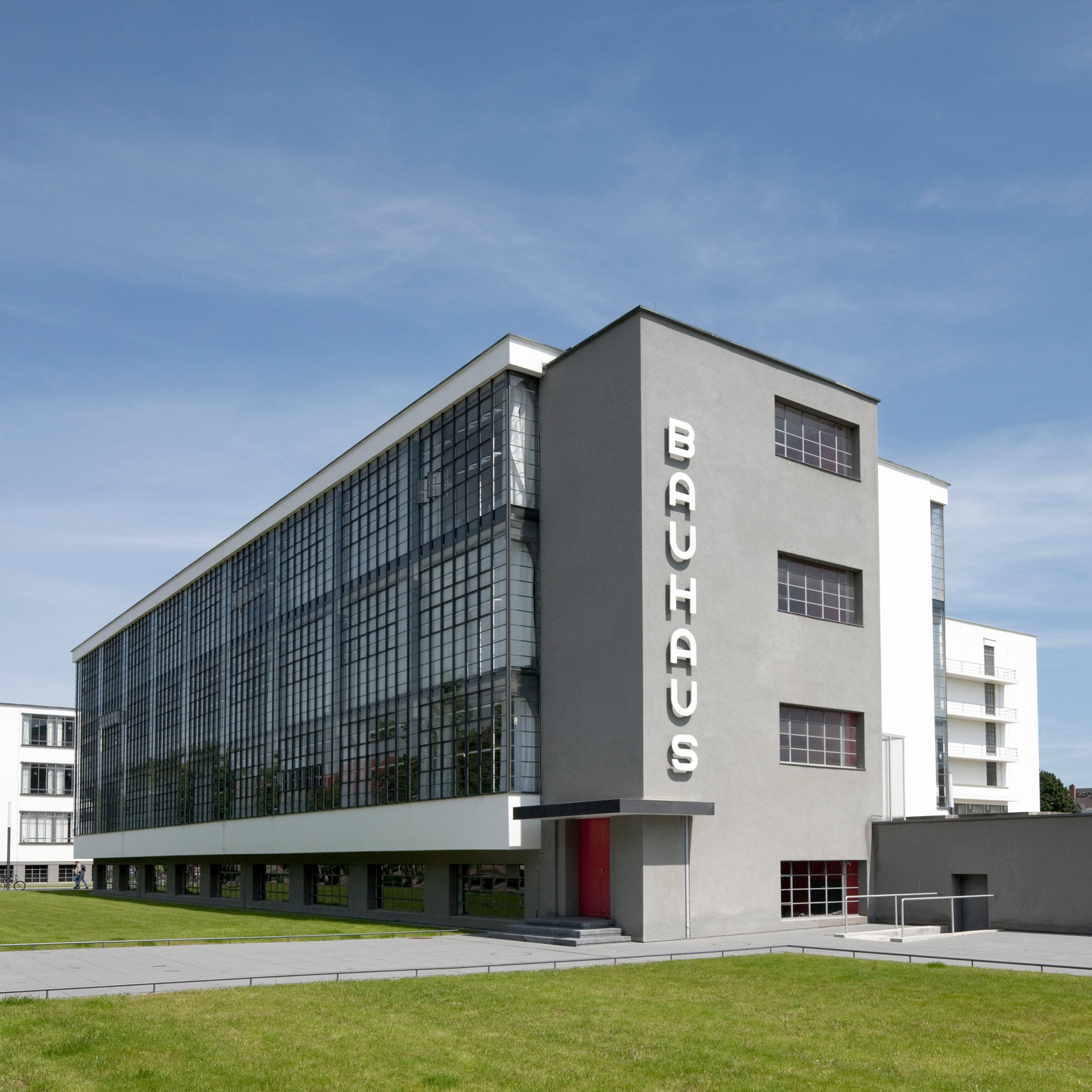
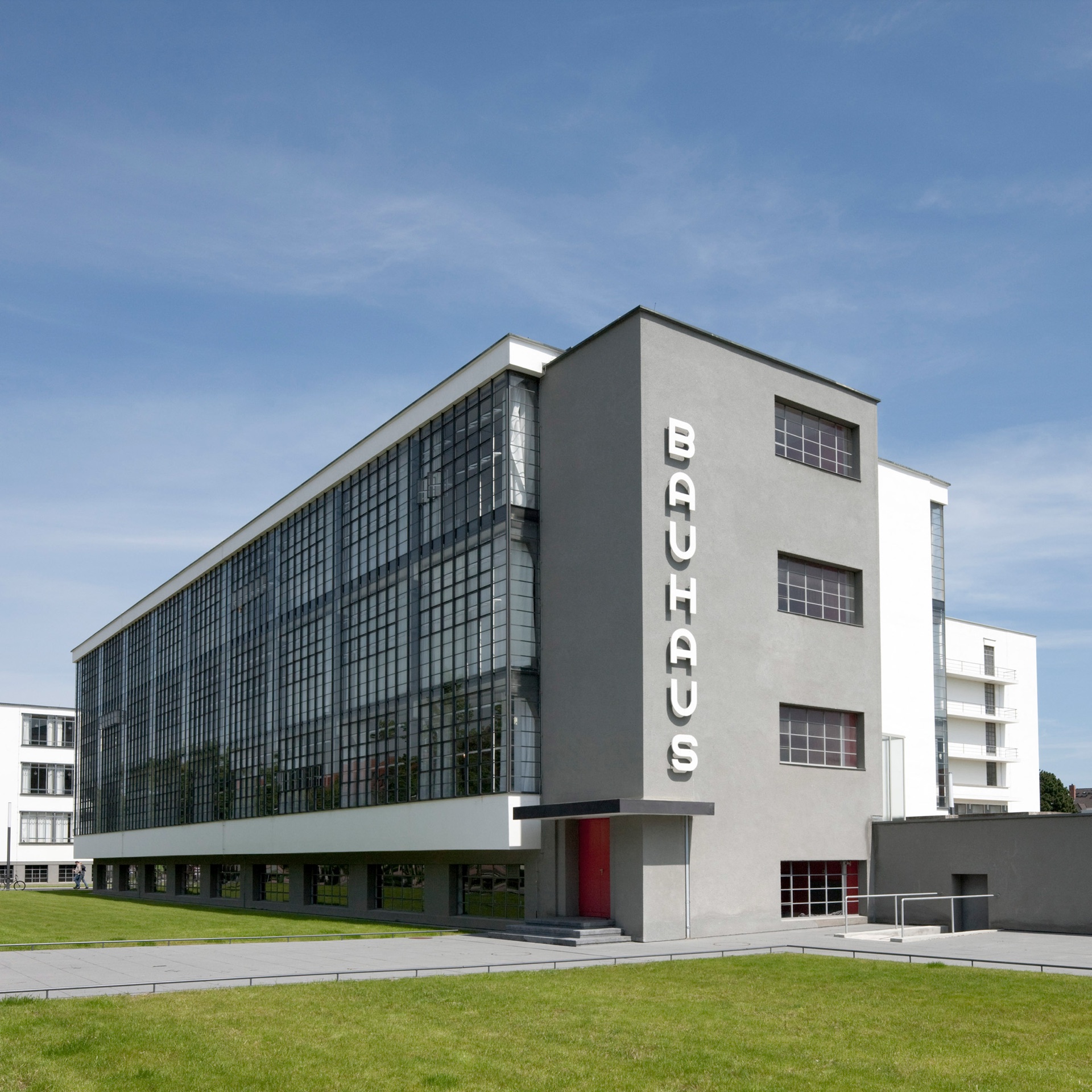
This uncompromising honesty is precisely why Bauhaus architecture possesses such a resonant, enduring presence. When you stand before a classic Bauhaus building, you are not being asked to look at a monument of ego; you are being invited to observe an exercise in spatial harmony. Consider the iconic school building in Dessau, with its clean, horizontal lines and massive glass curtain walls. There is a deep, almost meditative satisfaction in seeing a structure reduced to its geometric essence—cubes and rectangles working together in perfect, unforced equilibrium.
The expansive, white rendering of the walls does not feel empty; it feels deliberate. These surfaces function as visual silences, giving the human eye a rare and necessary room to breathe. In a noisy world, there is a distinct power in learning to hear the quiet, and these buildings achieve that by making silence tangible. The negative space becomes an active participant in the landscape, creating a beautiful tension between the solid mass of the building and the open air around it. It forces the observer to pause, to slow down their attention, and to appreciate the relationship between the structure and the sky.
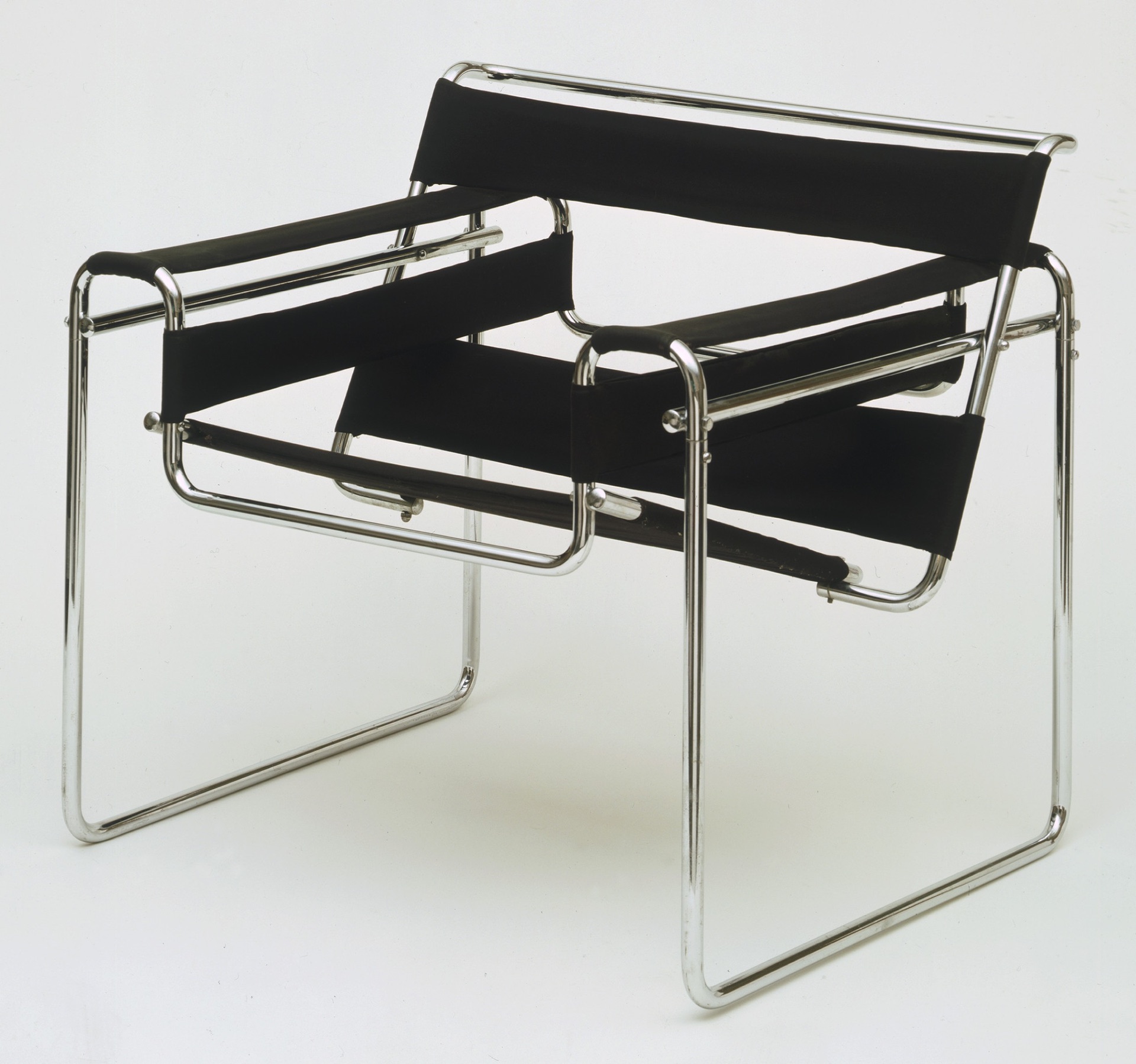
Inside these spaces, the movement brought that same rigorous clarity down to the scale of the ordinary, everyday object. The masters of the workshops—legends like Marcel Breuer, Wassily Kandinsky, and Ludwig Mies van der Rohe—redefined our relationship with the objects we live alongside. They looked at furniture not as a status symbol, but as a problem of space and support. Take Breuer’s famous Wassily Chair, inspired by the light, efficient frame of a bicycle. Constructed from bent tubular steel and simple, taut strips of canvas or leather, it is a piece of furniture that refuses to lie. It is completely transparent. You can trace every line of its skeleton; you can see exactly how the weight is distributed, how the joints meet, and how the materials hold the human body. There are no hidden springs, no thick velvet cushions masking a shoddy frame. It relies entirely on the strength of its own discipline, proving that an object can be deeply functional while existing as a piece of sculpture in its own right.
Yet, while Bauhaus is often associated with the cold precision of industrial steel and concrete, its deepest roots remain tied to the elemental nature of craftsmanship and raw materials. Before a student ever touched a machine, they had to understand the intrinsic logic of the medium—how wood bends, how stone carries weight, and how natural lines dictate form. When we look closely at the clean lines of a Bauhaus design, we see a philosophy that doesn’t conquer materials but listens to them. There is a striking parallel between the geometric economy of Bauhaus and the organic economy found in nature. A seed pod, the whorl of a shell, or the structure of a leaf holds no frills; every line has a biological reason to exist. Bauhaus bridges this gap, showing that the handmade and the machine-made can both find truth when they respect the honest properties of their materials.
This devotion to structure and restraint might, at a passing glance, seem entirely at odds with the deeply emotional, glowing colour fields of Mark Rothko. Where Bauhaus demands hard boundaries, geometry, and physical utility, Rothko offers us vast, luminous planes of bleeding ink and paint that dissolve into the canvas. One is a masterclass in the logic of the external world; the other is a deep dive into the internal architecture of human emotion. Yet, when they are brought together in the quiet space of a creative practice, they do not fight. Instead, they complement one another perfectly.
Both Bauhaus and Rothko are engaged in the exact same pursuit: the radical stripping away of the superficial to find what is true. Rothko did not paint flowers or figures, because he felt decoration got in the way of raw feeling; Bauhaus discarded the cornices and the carvings because they got in the way of raw function. When a Bauhaus structure creates a massive, clean white wall, it creates a field of silence. It is precisely within that architectural silence that a Rothko canvas can begin to hum. The strict, unyielding lines of a Bauhaus layout provide the perfect vessel to hold the fluid, boundless energy of pure colour. One provides the discipline, the other provides the breath. They are two sides of the same coin—the balance between the clear, logical mind and the soft, feeling heart.
This way of seeing extends seamlessly into graphic art and typography, transforming the printed page into an archive of careful attention. Under the guidance of designers like Herbert Bayer, the visual noise of traditional layouts was systematically dismantled. The heavy, archaic Gothic script was abandoned in favour of clean, sans-serif typography that prioritised immediate, democratic legibility. Graphic layouts became balancing acts of weight and space. Bauhaus printmakers understood that an enormous block of empty white space on a page is just as communicative as a bold line of text. By utilising strong asymmetry and stark geometric grids, they guided the viewer’s eye with absolute intent. It was design stripped of all calligraphic vanity—art that speaks through its structure rather than its embellishments.
Though the physical school was ultimately silenced in 1933 by a hostile political regime, the core philosophy was far too resilient to be locked within a specific time or place. The ideas scattered like seeds, crossing oceans to take root in the architecture of modern cities and the foundational structures of contemporary design across the globe. Today, we live in a world that is deeply indebted to that brief, intense decade of German experimentation. We see its shadow in the clean lines of our technology, the layout of the books we read, and the minimalist philosophy that dictates our modern living spaces.
To carry a long-standing passion for the Bauhaus movement is to appreciate the elegance of constraint. In a world that constantly encourages us to add more—more noise, more decoration, more clutter—the Bauhaus reminds us of the profound dignity that comes from stripping things back to their essence. It teaches us to respect our raw materials, to value the integrity of the handmade, and to look for beauty in the quiet utility of the things we choose to keep close. It is an art form that endures because it is grounded in truth: the belief that when you remove everything that doesn’t matter, what remains is absolutely perfect.